Is a Slipped Disc Keeping You From Moving the Way You Want?
Sharp pain that shoots down your leg or arm, numbness in your fingers or toes, a back that locks up when you bend: these are signs a disc in your spine may be bulging or herniated. At Morris Chiropractic in Painesville, OH, we find out exactly where the problem starts and build a gentle, non-surgical plan to take pressure off the disc and the nerve so you can get back to work, sleep and the things you enjoy. If you’ve been searching for a herniated disc chiropractor near me, we’re ready to help.
Book OnlineWhat Is a Herniated Disc?
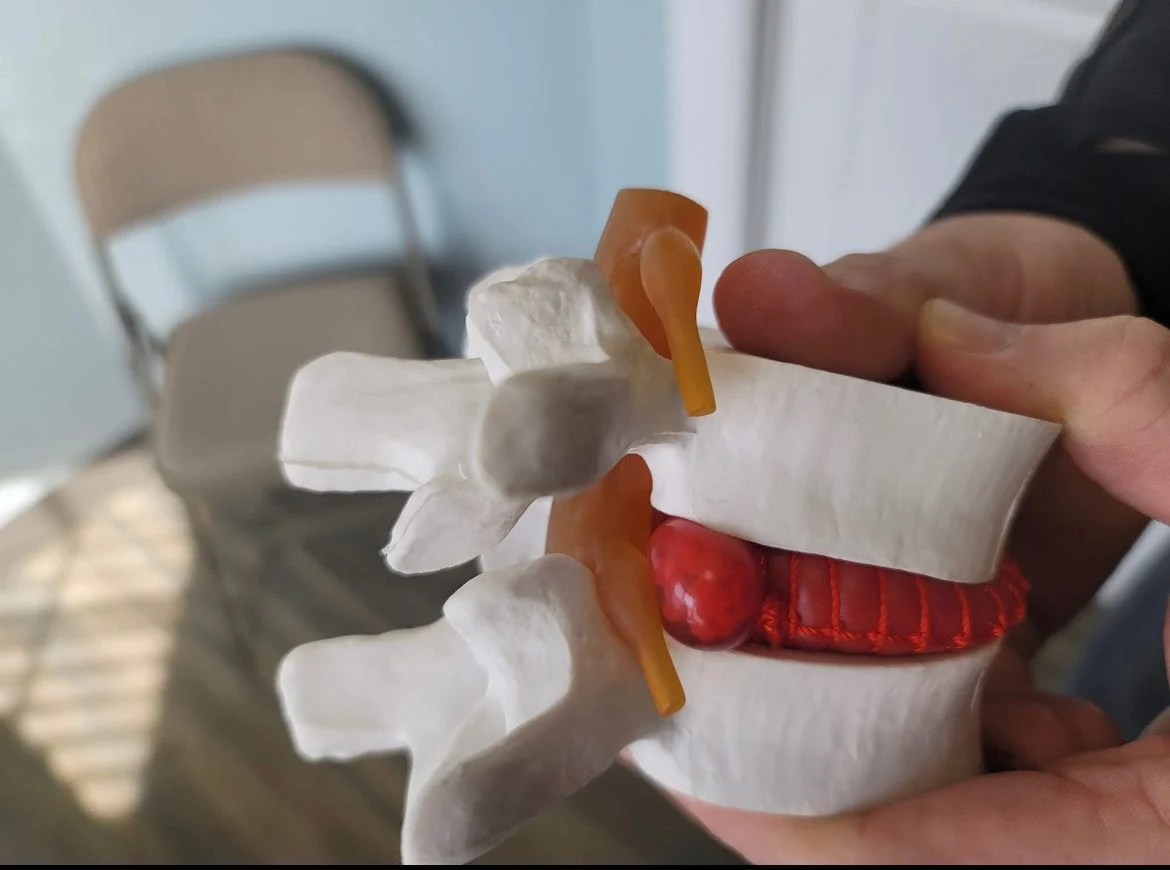
A herniated disc happens when the soft, gel-like center of a spinal disc pushes through a weak spot or tear in its tougher outer ring. The discs sit between the vertebrae and act as shock absorbers. When one herniates, the material that escapes can press on nearby nerve roots and cause pain, tingling, numbness or weakness. You may also hear it called a slipped disc, ruptured disc or bulging disc. The U.S. National Library of Medicine notes that most herniated discs occur in the lower back, with the neck being the next most common area.
What Does a Herniated Disc Feel Like?
Symptoms depend on which disc is affected and which nerve it touches. Common signs include:
- Sharp or burning pain in the low back that travels into the buttock, thigh or calf
- Neck pain that radiates into the shoulder, arm or hand
- Numbness or tingling in the arms, hands, legs or feet
- Muscle weakness or a feeling that a leg or arm gives out
- Pain that gets worse when you sit, cough, sneeze or bend forward
Leg pain from a lower back disc is often called sciatica, and arm pain from a neck disc frequently overlaps with pinched nerves. Many patients first come to us for back pain or neck pain before learning a disc is the source.
What Causes a Disc to Herniate?
Discs lose water and flexibility with age, which makes them more likely to tear. Lifting with a rounded back, twisting under a load, repetitive strain at work, long hours of sitting, extra body weight and sudden trauma such as a fall or car accident can all add stress. Sometimes there’s no single event; the disc simply wears down over time until one ordinary movement tips it over the edge.
How Do We Find Out If You Have a Herniated Disc?
Your care starts with a conversation about your symptoms and history, followed by a hands-on exam that checks posture, range of motion, reflexes, muscle strength and sensation. When it’s needed, in-office digital X-rays help us see the alignment of your spine, disc spacing and any degeneration. If your exam suggests you need an MRI or another specialist, we’ll tell you. You can learn more about how that first appointment works on our Your First Visit page.
How Does a Chiropractor Treat a Herniated Disc?
The short answer: by reducing pressure on the disc and nerve, improving spinal motion and calming inflammation so the body can heal. Your plan is built around your exam, and it may include a combination of the following.
Spinal Decompression Therapy
Spinal decompression gently stretches the spine in a controlled, computerized way. This creates negative pressure inside the disc, which may help draw bulging material back toward the center and allow water, oxygen and nutrients to flow in. We use several decompression systems, including Accu-Spina IDD Therapy, the KDT Neural Flex Table and Ergoflex Back On Trac, so we can match the treatment to your spine and comfort level.
Gentle Chiropractic Adjustments
Targeted chiropractic care restores normal motion to stiff joints above and below the injured disc, which reduces strain on the area and helps the surrounding muscles relax. Adjustments for disc patients are carefully modified; we never force a joint and always adapt techniques to what your body can tolerate.
Deep Tissue Laser Therapy
Deep tissue laser therapy uses specific wavelengths of light to reach inflamed tissue and support cellular repair. Many patients find it soothing and helpful for easing pain and muscle spasm while the disc heals.
Exercises and Everyday Habits
We’ll show you stretches, core-strengthening moves and posture changes that protect your discs at home and work. Small adjustments to how you sit, lift and sleep make a real difference in keeping a disc from flaring up again.
Can You Fix a Herniated Disc Without Surgery?
For many people, yes. Research shows the majority of herniated discs improve with conservative care, and surgery is typically reserved for cases with severe or worsening nerve weakness or symptoms that don’t respond to other treatment. Our goal is to give you a structured, non-invasive option first. For a deeper look, read Can a Chiropractor Help a Herniated Disc Without Surgery? and What Is the Difference Between Spinal Decompression and a Regular Adjustment?
When Should You Seek Emergency Care?
Go to the emergency room right away if you have loss of bladder or bowel control, numbness in the groin or inner thighs, or sudden, severe weakness in your legs. These can signal a rare but serious condition that needs immediate medical attention.
Looking for a Herniated Disc Chiropractor Near You?
Our office on Mentor Avenue in Painesville is an easy drive for patients throughout Lake County, including those coming from Mentor, Willoughby and Madison. New to our practice? Visit our New Patients page, review our payment options, or browse all the conditions we treat.
Questions Patients Ask About Herniated Discs
Can a chiropractor help a herniated disc?
Yes. A chiropractor can help relieve herniated disc pain by reducing pressure on the disc and nerve with spinal decompression, gentle adjustments, laser therapy and targeted exercises. At Morris Chiropractic in Painesville, OH, every plan starts with a thorough exam so treatment fits your specific disc problem.
Is a bulging disc the same as a herniated disc?
Not exactly. A bulging disc extends outward evenly but its outer layer stays intact, while a herniated disc has a tear that lets the inner material push through. Both can press on nerves and cause similar symptoms, and both often respond well to conservative care.
How long does it take a herniated disc to heal?
Many people notice improvement within a few weeks of consistent care, though full healing can take several weeks to a few months. Your age, the size of the herniation, your activity level and how closely you follow your home program all affect recovery time.
Does spinal decompression hurt?
No. Most patients find spinal decompression comfortable and relaxing. You lie fully clothed on a padded table while the system applies a slow, gentle stretch. If anything feels uncomfortable, the settings are adjusted right away.
Will I need an MRI before treatment?
Not always. A detailed exam and, when needed, digital X-rays often give enough information to begin care. If your symptoms or exam findings suggest an MRI is needed, we’ll recommend one and coordinate with your medical provider.
What should I avoid with a herniated disc?
Avoid heavy lifting, bending and twisting at the same time, sitting for long stretches without breaks and high-impact activities until your symptoms settle. Gentle walking is usually helpful, and we’ll guide you on which movements are safe for your situation.
Where can I find a herniated disc chiropractor near me in Lake County?
Morris Chiropractic is located at 1545 Mentor Ave in Painesville, OH, and serves patients from Mentor, Willoughby, Chardon, Madison, Fairport Harbor and nearby communities. Call (440) 639-9171 to schedule an appointment.
Ready to Take the Pressure Off Your Spine?
You don’t have to wait out disc pain or jump straight to surgery. Call Morris Chiropractic at (440) 639-9171 or request an appointment online, and let’s find out what your spine needs to heal.