Is Heel Pain Making Every Step Hurt?
If your first steps out of bed feel like walking on broken glass, you’re not alone, and you don’t have to live with it. At Morris Chiropractic in Painesville, OH, we treat plantar fasciitis with the Erchonia FX 635, an FDA market-cleared low-level laser designed specifically for chronic heel pain. It’s painless, non-invasive and drug-free, and many patients get back to walking, working and exercising comfortably after just a few weeks of care. If you’ve been searching for a plantar fasciitis specialist near me in Lake County, we’d love to help.
Book OnlineWhat Is Plantar Fasciitis?
Plantar fasciitis is irritation and inflammation of the plantar fascia, the thick band of tissue that runs along the bottom of your foot from your heel to your toes. It’s one of the most common causes of heel pain, and it often feels worst first thing in the morning or after sitting for a while. A healthy plantar fascia works like a rubber band, stretching and recoiling with every step. When it loses that flexibility, the tissue becomes strained and painful.
That stiffness isn’t always the same along the whole band. Some people feel pain right at the heel, while others feel it in the arch or closer to the toes. Heel pain can also change the way you walk, which is why plantar fasciitis often shows up alongside knee pain, hip pain and even back pain. You can see the full list of problems we help with on our conditions treated page.
Why Don’t Stretches, Shots and Orthotics Always Work?
Common treatments include stretching, night splints, steroid injections, anti-inflammatory medications and orthotics. For many people these help. For others, they’re painful, difficult to keep up with, or simply don’t make a difference.
Over the years, we’ve noticed a pattern with arch supports. A rigid orthotic may take the pain away for years, but eventually the pain returns. Patients try one new orthotic after another without relief. The old orthotic didn’t wear out; the plantar fascia has continued to shorten and tighten, even while the insert was hiding the symptoms. Some of these patients can barely walk without their shoes on. Inserts reduce pain by limiting how far the plantar fascia stretches with each step, but they never address the underlying problem.
What’s the Real Cause Behind Chronic Heel Pain?
In many stubborn cases, the plantar fascia simply isn’t getting enough blood flow or cellular energy to stay flexible and heal. Without good circulation, the tissue becomes rigid, painful to stretch and slow to recover. Low-level laser therapy works at the cellular level to restore that flexibility in a remarkably comfortable way. No surgery. No shots. Just natural rehabilitation of the tissue.
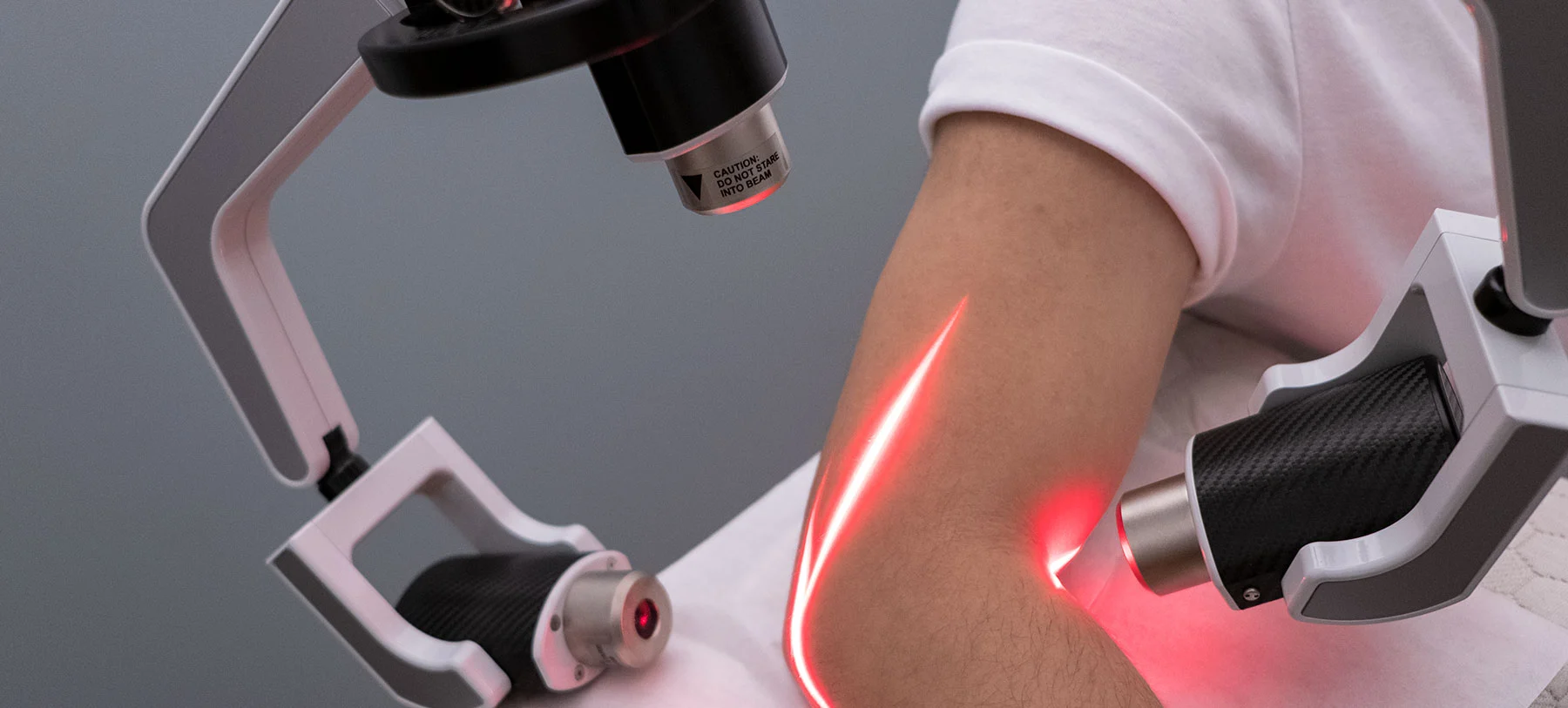
How Does Low-Level Laser Therapy Help Plantar Fasciitis?
The FX 635 promotes healthy cellular function through painless bio-stimulation. Light energy supports the cell’s energy production, which helps calm inflammation and lets the tissue start repairing itself. For many patients, we also treat the top of the foot, where an artery sends branches down to feed the plantar fascia. Treating both the top and bottom of the foot supports new blood vessel growth (neovascularization) into the tissue that needs it most. Learn more about this technology on our deep tissue laser therapy page, or read how laser therapy works for pain.
What Does Restored Blood Flow Look Like?
One of our patients, a 64-year-old woman with plantar fasciitis, had already tried orthotics, topical pain creams, oral anti-inflammatory medication and stretching exercises with no results. Before laser therapy, imaging showed very little blood flow to her plantar fascia, leaving the tissue stiff, painful and blood-deprived. After treatment, new blood vessels could be seen delivering circulation into the problem area, and her pain eased. No drug, exercise or stretch can grow new blood vessels into the tissue. Restoring that blood supply is what gets to the root of the problem.
How Long Does It Take to Notice Results?
It depends on what’s driving your stiffness. If the problem is mainly a lack of cellular energy, symptoms often change quickly. If the plantar fascia is also short on blood vessels, improvement is slower, because new vessels take time to grow. Laser therapy addresses the cellular energy problem first, which allows both issues to be handled. If you’re three or four treatments in and haven’t noticed a change, don’t be discouraged. As the research below shows, patients kept improving for months after their final session.
How Much Does Plantar Fasciitis Laser Therapy Cost?
The cost of laser therapy varies based on the condition being treated, how long the problem has been going on and other individual factors. Our rates are very reasonable, and we’re currently the only clinic in Lake County, Ohio, with the Erchonia FX 635, which is FDA cleared for treating chronic plantar fasciitis. Visit our payment options page for details.
What Does the Research Say About Laser Therapy for Plantar Fasciitis?
Low-Level Laser Therapy for the Treatment of Chronic Plantar Fasciitis: A Prospective Study – Foot & Ankle International, February 7, 2014. James R. Jastifer, MD, Fernanda Catena, MD, Jesse F. Doty, MD, Faustin Stevens, MD, Michael J. Coughlin, MD.
Background: Plantar fasciitis affects nearly 1 million people annually in the United States. Traditional nonoperative management is successful in about 90% of patients, usually within 10 months. Chronic plantar fasciitis develops in about 10% of patients and is a difficult clinical problem to treat. Low-level laser therapy (LLLT) has demonstrated promising results for the treatment of acute and chronic pain.
Research Study Methods: Thirty patients received LLLT and completed 12 months of follow-up. They were treated twice a week for 3 weeks, for a total of 6 treatments, and evaluated at baseline, 2 weeks after treatment, and at 6 and 12 months. Patients completed the Visual Analog Scale (VAS) and Foot Function Index (FFI) at each follow-up.
Results: Heel pain on the Visual Analog Scale improved from an average of 67.8 out of 100 at baseline to 6.9 out of 100 at 12 months. The total Foot Function Index score improved from an average of 106.2 to 32.3 at 12 months.
Conclusion: Although further studies are warranted, this study shows that LLLT is a promising treatment for chronic plantar fasciitis.
What If Laser Therapy Isn’t Right for My Heel Pain?
Even if laser therapy isn’t the best fit for your plantar fasciitis or heel spurs, our doctors have other ways to treat difficult cases. Piezowave2 therapy uses focused acoustic waves to stimulate healing in stubborn soft tissue, and you can read more in what shockwave therapy is and who it’s for. Because foot pain often affects the knees, hips and spine, gentle chiropractic care can help restore balance through the rest of your body. Runners and active adults dealing with heel pain may also benefit from our sports injury care.
What Happens at My First Visit?
We’ll start by listening to your story, examining your feet, gait and posture, and talking through your options. If you’re new to our office, our new patients page and first visit guide explain what to expect, and you can meet our doctors on the Meet the Team page. Patients come to us from Painesville, Mentor and across Lake County.
Plantar Fasciitis FAQs
What is the fastest way to relieve plantar fasciitis pain?
For chronic plantar fasciitis, low-level laser therapy is one of the most effective non-invasive options available. In the published study on this treatment, patients received six sessions over three weeks and reported major reductions in heel pain that lasted at least a year.
Is laser therapy for plantar fasciitis painful?
No. The Erchonia FX 635 uses painless bio-stimulation. Most patients feel nothing at all during treatment, and there are no needles, shots or downtime.
How many laser treatments will I need for plantar fasciitis?
It depends on how long you’ve had heel pain and how much blood flow your plantar fascia has lost. Some people notice change quickly, while others improve gradually as new blood vessels grow. Many patients continue to improve for months after their final session.
Why does plantar fasciitis hurt most in the morning?
The plantar fascia tightens while you rest. When you take your first steps, the stiff tissue is suddenly stretched, which causes that sharp heel pain. Pain often eases as you move, then returns after sitting or standing for long periods.
Will orthotics cure my plantar fasciitis?
Orthotics can reduce pain by limiting how much the plantar fascia stretches, but they don’t fix the stiffness or poor blood flow behind it. Over time the tissue can keep shortening, which is why pain often returns even with a new insert.
Is there a plantar fasciitis laser treatment near me in Lake County?
Yes. Morris Chiropractic at 1545 Mentor Ave in Painesville, OH, is currently the only clinic in Lake County with the Erchonia FX 635 laser, which is FDA cleared for chronic plantar fasciitis. Call (440) 639-9171 to schedule.
Can a chiropractor help with heel pain?
Yes. Along with laser therapy, our doctors use options like Piezowave2 therapy and chiropractic care to address heel pain, heel spurs and the knee, hip and back strain that often comes with changing the way you walk.
Ready to Take Your Next Step Without Heel Pain?
Stop giving up your walks, workouts and favorite activities to avoid aggravating your feet. Call Morris Chiropractic at (440) 639-9171 or request an appointment online to find out if laser therapy is right for your plantar fasciitis in Painesville, OH.